Christ's Mysterious Word of Warning
**In LessHerod.com, I am exploring the intersection of power, Christian leadership, and the way of the Cross. Currently I’m sketching the contours of a drama that unfolds at the center of Mark’s Gospel. Three scenes capture the drama of discipleship: The Feast of Herod; Christ’s Mysterious Warning; and The Lesson of the Cross.
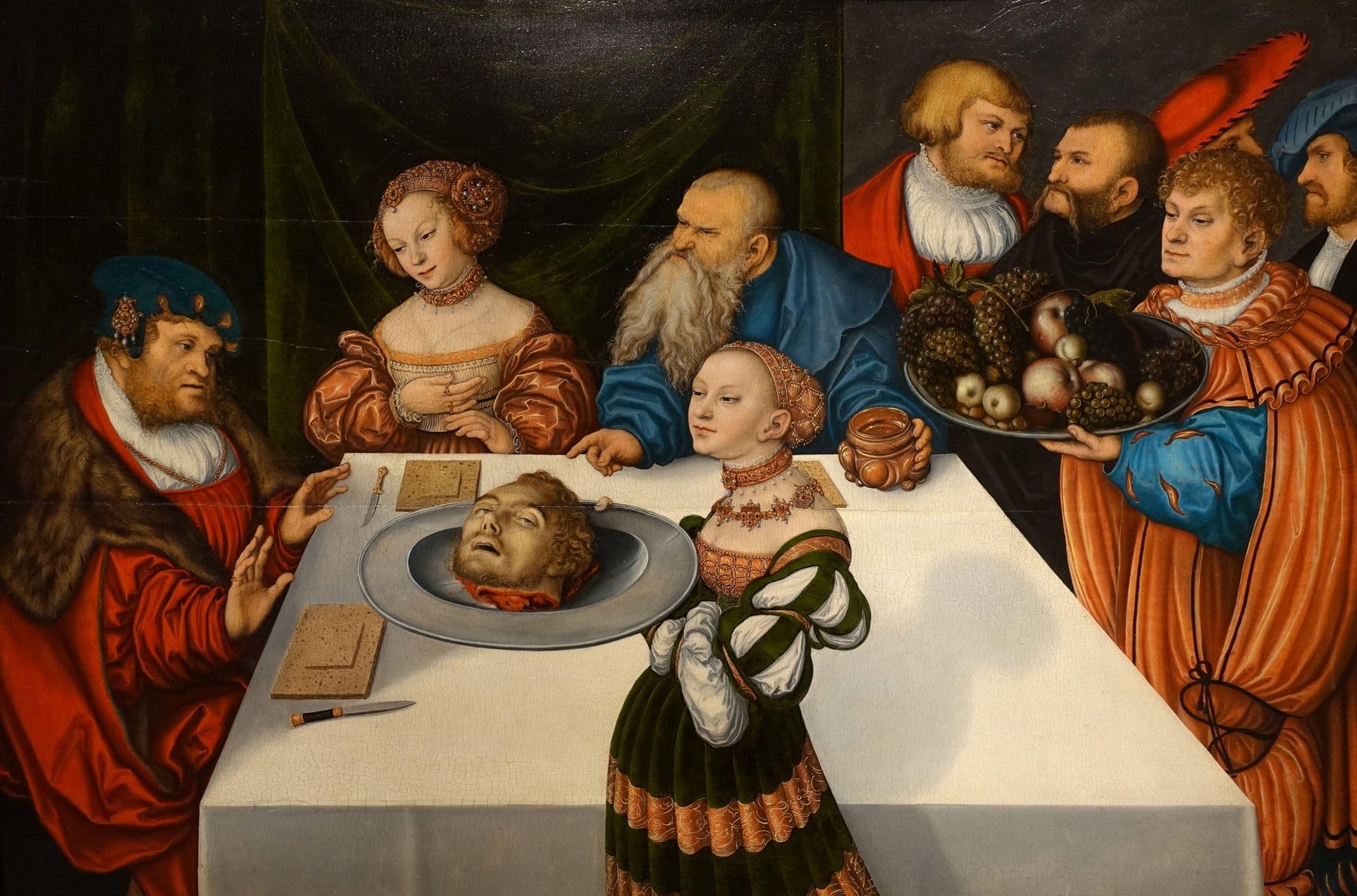
Herod and the Disciples – Consider the Contrast
Herod Antipas is part of a multi-generational royal dynasty that has shaped the national culture through elaborate building projects, military might, and enormous wealth. He bristles with power, prestige, and a platform of massive political influence.
The disciples? A rag-tag group of fishermen, outcasts, and dreamers. They left everything behind. They have no resources, no cultural capital. But they have Jesus.
What possible connection could there be between Herod and the disciples? No wonder the disciples are confused when Jesus issues his warning:
Mark 8:15
And he cautioned them, saying, “Watch out; beware of the leaven of the Pharisees and the leaven of Herod.”
Wait! What?
Herod? The tyrant? The guy who threw his own elaborate birthday party? The guy who lives in a palace and pulls the levers of power? The guy who built a city and named it after Tiberius Caesar? The guy with a posse of powerful friends? The image-managing-bully who beheaded John the Baptist?
Christ's mysterious word of warning just doesn’t seem to fit.
But what if it does? Even a little? Like a tiny pinch of leaven hidden in the mix, as small as a speck, but as potent as poison,
What if there’s just enough Herod in the hearts of the disciples to grow, infect and compromise Christ’s beautiful work, Christ’s kingdom mission, and their kingdom calling?
The Warning is Real and the Timing is Perfect.
At the highpoint of ministry momentum, in the warm afterglow of the feeding of the multitude, Jesus voices his concern.
Christian leaders sometimes misread the meaning of momentum.
When numbers increase, or results are achieved, or the evidence of God’s good work is seen, it’s easy to assume that all is well: the ministry is flourishing, our hearts are right.
But ministry momentum can come with hidden dangers – which is why Jesus chooses this very moment to challenge them with a mysterious, unexpected, but perfectly timed word of warning.
*You can read the full story below – Mark 8:1-21
But What is the Leaven of Herod?
In the New Testament leaven is a metaphor. It represents an influence, planted within, that grows and has the power to transform.
Occasionally, it carries a positive sense. For instance, an illustration of the Kingdom of God:
Luke 13:20-21
And again he said, “To what shall I compare the kingdom of God? It is like leaven that a woman took and hid in three measures of flour, until it was all leavened.”
But most often, leaven is a metaphor for sin or evil:
1 Corinthians 5:6-7
6 Your boasting is not good. Do you not know that a little leaven leavens the whole lump? 7 Cleanse out the old leaven that you may be a new lump, as you really are unleavened. For Christ, our Passover lamb, has been sacrificed.
Putting it together: leaven is something small, hidden, growing from within, permeating, filling, and altering the character of its host.
But what is the leaven of Herod? What’s the threat? What’s the danger?
One view sees the warnings about Herod and the Pharisees as being identical. In this view, the threat is the growing opposition to Jesus, or a blindness and unwillingness to recognize who Jesus truly is.
Perhaps. But I find good reasons to see the warnings about Herod and the Pharisees as two different kinds of threat. (**See note below)
Another view is that Herod, in particular, represents the danger of nationalism or violent political ambition. A good case can be made for this.
Everything about Herod Antipas, just like his father Herod the Great, was an expression of political ambition, power politics, and a strange brew of religious nationalism. Both men were masters at merging religious sensibilities with the politics of empire. They were experts at using the language and symbols of Judaism on the one hand, and building partnerships with the Roman Empire on the other. They played both sides of the religious/political equation to maintain personal status, position, and power.
In future posts, I will come back to this theme.
But there’s a third option for understanding the danger of the leaven of Herod: it's the subtle corruption of personal character.
As I wrote in an earlier post, there’s a reason Mark’s account of the feast of Herod is so lengthy and so detailed; a reason we’re given a window into Herod’s inner thoughts and attitudes. In his description of the feast of Herod, Mark shines a light on Herod’s mindset, motivations, and actions. As I see it, this is our primary point of reference for understanding the leaven of Herod. Put simply, the warning is about Herod’s mindset and motivations, and the danger that these will creep into the hearts of the disciples, even a little, a pinch of leaven in the mix, small as a speck, potent as poison.
This fits with the literary structure of Mark’s gospel, and it fits well with the first century understanding of leaven. In Rabbinical writing, leaven is often a symbol for evil influence or wicked human dispositions.
Surprisingly, Christ's warning sends an unexpected message: Herod and the disciples may be more alike than we thought. Soon enough, the disciples will be arguing over which of them is the greatest (Mark 9:33-37). Then, James and John will ask to be given the positions of greatest honor. (Mark 10:35-45).
Weirdly, in some subtle, or not so subtle way, the heart of Herod and the hearts of the disciples seem to mirror one another. What motivates Herod – recognition, image, position, power – motivates the disciples as well. In seed form? A pinch of leaven?
This is the leaven of Herod. It’s a matter of character –heart, mindset, motivations, and the choices and behaviors that follow. This is Christ's concern for his disciples.
At the critical moment, Jesus warns them. His warning echoes down through the ages and lands at our doorstep today, as relevant as ever.
The Warning Works Like a Hinge
Christ’s mysterious word of warning is strategically placed. Coming after the feast of Herod and leading immediately to the lesson of the Cross, it works like a hinge, pointing back to Herod and forward to the way of the Cross.
The warning is multidimensional. It touches on religious nationalism, power politics, and a syncretistic blending of faith and political ideology. It also speaks to hardness of heart: a spiritual blindness to the truth about what kind of Messiah Jesus actually is and what he is doing in our world.
Related to this, but above and beyond it, the warning is about the formation of character in Christian leaders. As such, it becomes the perfect set up for the lesson of the Cross.
Mark 8 – 10 will focus intensely on the spiritual formation/character formation of the disciples. Remarkably, the lesson of the Cross will be repeated three times in these chapters. Why?
Because the lesson of the Cross is the antidote, the alternative, the answer to the leaven of Herod.
Moving forward, Christ’s warning will work as a hinge. We will look back at Herod, his feast, his heart, his actions. We will push forward into the lesson of the Cross, revealing Christ's heart and the core character qualities of Christian leadership.
Along the way, we'll ask important questions.
Where is the leaven of Herod showing up in the political realm? That's important and we'll look at that. But that's not the most important question.
Where is the leaven of Herod showing up in Christian churches or movements? That's an important question and we'll look at that. But that's not the most important question.
The most important question for every Christian leader is this:
Where is the leaven of Herod showing up in me?
Next post: The Lesson of the Cross.
Last post: Christ's Compassion and the Beauty of our Calling
*Mark 8:1-21
1 In those days, when again a great crowd had gathered, and they had nothing to eat, he called his disciples to him and said to them, 2 “I have compassion on the crowd, because they have been with me now three days and have nothing to eat. 3 And if I send them away hungry to their homes, they will faint on the way. And some of them have come from far away.” 4 And his disciples answered him, “How can one feed these people with bread here in this desolate place?” 5 And he asked them, “How many loaves do you have?” They said, “Seven.” 6 And he directed the crowd to sit down on the ground. And he took the seven loaves, and having given thanks, he broke them and gave them to his disciples to set before the people; and they set them before the crowd. 7 And they had a few small fish. And having blessed them, he said that these also should be set before them. 8 And they ate and were satisfied. And they took up the broken pieces left over, seven baskets full. 9 And there were about four thousand people. And he sent them away. 10 And immediately he got into the boat with his disciples and went to the district of Dalmanutha. 11 The Pharisees came and began to argue with him, seeking from him a sign from heaven to test him. 12 And he sighed deeply in his spirit and said, “Why does this generation seek a sign? Truly, I say to you, no sign will be given to this generation.” 13 And he left them, got into the boat again, and went to the other side. 14 Now they had forgotten to bring bread, and they had only one loaf with them in the boat. 15 And he cautioned them, saying, “Watch out; beware of the leaven of the Pharisees and the leaven of Herod.” 16 And they began discussing with one another the fact that they had no bread. 17 And Jesus, aware of this, said to them, “Why are you discussing the fact that you have no bread? Do you not yet perceive or understand? Are your hearts hardened? 18 Having eyes do you not see, and having ears do you not hear? And do you not remember? 19 When I broke the five loaves for the five thousand, how many baskets full of broken pieces did you take up?” They said to him, “Twelve.” 20 “And the seven for the four thousand, how many baskets full of broken pieces did you take up?” And they said to him, “Sen.” 21 And he said to them, “Do you not yet understand?”
1) The way Mark phrases the warning seems unnecessarily cumbersome if he wanted to equate Herod and the Pharisees in the warning. Mark specifically writes: The leaven of the Pharisees and the leaven of Herod. He could have simply written: the leaven of the Pharisees and Herod. By repeating the word for both the Pharisees and Herod, he seems to be separating them into two categories.
2) In the gospels we find places where the Pharisees and the Herodians are spoken of together (for instance Mark 12:13). But in those cases it is always the Herodians - plural - as a group. The fact that the warning refers to Herod, specifically in the singular, points to a quality or qualities in him and not just the larger group of the Herodians.
3) Most significantly, the structure of Mark's gospel seems intentionally designed to put our focus on Herod, as we have seen in previous posts on the feast of Herod. From a literary structure reading of the Gospel of Mark, Herod is set up as a foil for the character of Christ and the way of the Cross, giving dramatic context to the crisis of character and the development of the disciples.